7 min read
HOW TO PERFORM THE WAI KRU RAM MUAY — STEP BY STEP
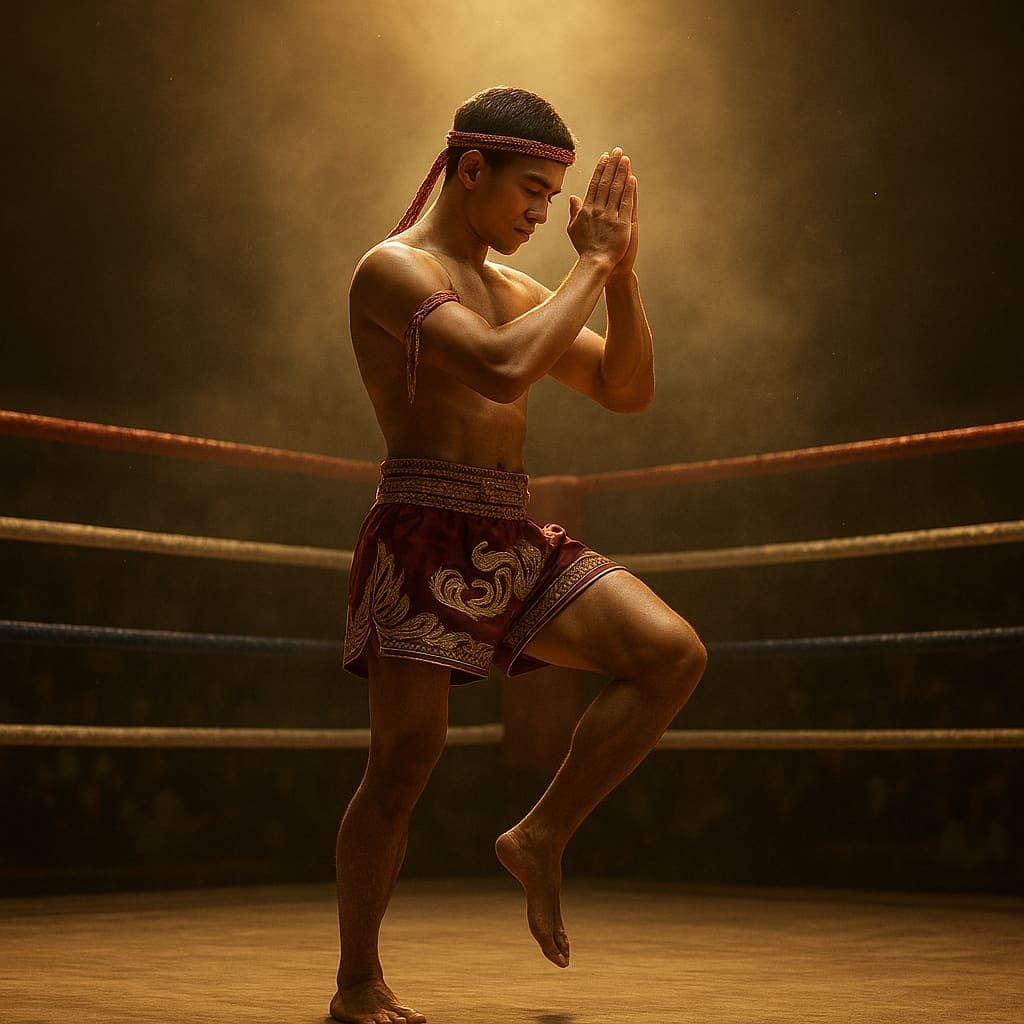
Before every traditional Muay Thai fight, you will see each fighter perform a slow, stylized dance around the ring. To unfamiliar viewers, this may look like a kind of warm-up or a piece of ceremonial theater. It is neither. The Wai Kru Ram Muay is one of the oldest and most important traditions in Muay Thai, and understanding it deepens your appreciation for the sport in a way that few other things can. The ritual is a living piece of Thai cultural heritage, a statement of identity, and an expression of respect for teachers, ancestors, and the spiritual dimensions of combat.
The name itself tells you what the ritual is about. Wai means to pay respect, kru refers to teachers, and ram muay means the boxing dance. Taken together, the Wai Kru Ram Muay is the respect dance paid to one's teachers before fighting. The specific teachers being honored include the fighter's personal trainer, the head of the camp, past generations of Muay Thai masters, and more broadly the art itself as an inherited tradition that predates any individual fighter.
The ritual has several parts, and while the details vary from camp to camp, the general structure is consistent. Below is the canonical sequence — what to do, and in what order, when you perform it.
Step 1: Receive the mongkol. The headband is placed on you by your head trainer. You do not put it on yourself. The mongkol must not touch the ground from this point until it is removed; it represents the gym, the lineage, and the protective bond between fighter and teacher.
Step 2: Enter the ring with intention. Traditionally a male fighter steps over the top rope rather than under, marking the entry as a deliberate crossing of a threshold. Female fighters historically entered through the ropes rather than over them at venues where the upper space was considered sacred — modern rule changes have softened this, but follow the local convention. Once inside, do not turn your back on your corner without acknowledgment.
Step 3: Seal the ring. Walk slowly to each of the four ring posts in clockwise order. At each post, lower one hand to the post or the rope and offer a brief mental dedication — to your teachers, your family, the spirits of the ring, or however your camp instructs. This is the sealing portion: you are creating a protected space within which the fight will take place. Keep your movements deliberate and slow; this is not a warm-up.
Step 4: Return to the center and offer the wai. From the center of the ring, bow forward, pressing your gloved hands together as best you can, and offer three short prostrations or bows facing the direction of your gym or your home. This portion specifically honors your kru (teacher) and the lineage you fight under.
Step 5: Begin the Ram Muay proper. From a kneeling or low stance, rise into the movements your camp has taught you. The most common foundational sequence is the soaring bird — arms extended out and down like wings — repeated three times in different directions of the ring. After the bird, individual camp variations differ: some incorporate hunter movements (drawing a bow), some mimic warrior gestures (sharpening a sword), some include character references from the Ramayana. Move through your camp's specific sequence at the pace the live sarama music suggests.
Step 6: Finish at the center and walk back to your corner. The dance ends when you arrive back in your corner facing your trainer. The trainer removes the mongkol with a final blessing, places it somewhere safe (often on the corner post or with the gym bag), and your prajied armbands stay on for the fight. You are now ritually prepared to compete.
A foreign fighter performing their first Wai Kru should learn their camp's specific sequence in training before the fight, not improvise in the ring. Many camps in Thailand teach the Wai Kru as part of preparing a foreign student for their first Thai bout; ask your trainer specifically.
The ritual has cultural and religious depth beyond the steps. The next sections explain what the movements actually mean and why the ritual exists at all.
The fighter enters the ring, often stepping over the top rope as a symbolic gesture. Once inside, they walk or kneel toward each side of the ring, touching the ropes and saying a brief prayer or mental dedication at each corner. This portion of the ritual is called the sealing of the ring, and it is meant to create a protected space within which the fight will take place. Spiritual protection from malign influences is part of the function, and many Thai fighters take this element very seriously regardless of their personal religious beliefs.
After sealing the ring, the fighter moves to the center and begins the Ram Muay proper. The dance consists of several movements that often mimic the actions of a bird or a hunter or a warrior preparing for battle. Each camp has its own variations, and experienced Thai fans can often tell where a fighter trained by watching the distinctive elements of their Wai Kru. A fighter who trained at the legendary camp Chuwattana might perform a different dance from one who trained at Sit Yodtong, and these differences are a source of pride and identity.
Throughout the Ram Muay, the fighter wears two pieces of ceremonial equipment. The mongkol is a braided headband, usually made of cotton and sometimes containing small amulets or blessed items, that is placed on the fighter's head by their trainer before the ritual. The mongkol is considered sacred and is never allowed to touch the ground. The prajead are armbands worn on the biceps, which serve similar protective functions and may also carry spiritual associations. Both pieces of equipment are blessed by monks before being worn in competition, and they are treated with significant respect.
When the Ram Muay is complete, the fighter returns to their corner. The trainer removes the mongkol with a final blessing and places it somewhere safe, and the fighter is now ritually prepared to compete. Some fighters continue to wear the prajead during the actual fight, while others remove them. The exact practice varies by tradition and personal preference.
The function of the Wai Kru extends beyond the spiritual. It also serves as a period of mental preparation, during which the fighter focuses inward, slows their breathing, and settles their nerves. For experienced fighters, the familiar movements become a kind of meditation that helps them transition from the pre-fight adrenaline state to a composed fighting state. Foreign fighters who learn to perform the Ram Muay often report that it genuinely helps them manage pre-fight anxiety, even when they do not share the religious beliefs that originally inspired the ritual.
For foreign practitioners visiting Thailand, learning the Wai Kru is an important step in being accepted at a Thai camp. Trainers take the ritual seriously and appreciate students who show respect for it. Most camps will teach the Wai Kru to interested foreign students, and performing it with sincerity before your first Thai fight is a meaningful experience that will be remembered by your trainers and by the Thai audience watching the bout.
Modern international promotions sometimes shorten or omit the Wai Kru for television timing reasons, which many traditionalists view as a loss. Thai fighters who compete internationally often insist on performing at least an abbreviated version, and some promotions have come to accept this as part of presenting authentic Muay Thai. The ritual is not a decoration. It is part of what makes Muay Thai what it is, and its preservation matters for the integrity of the sport as a cultural tradition, not just as a combat discipline.