5 min read
HOW TO DEVELOP REAL KNOCKOUT POWER
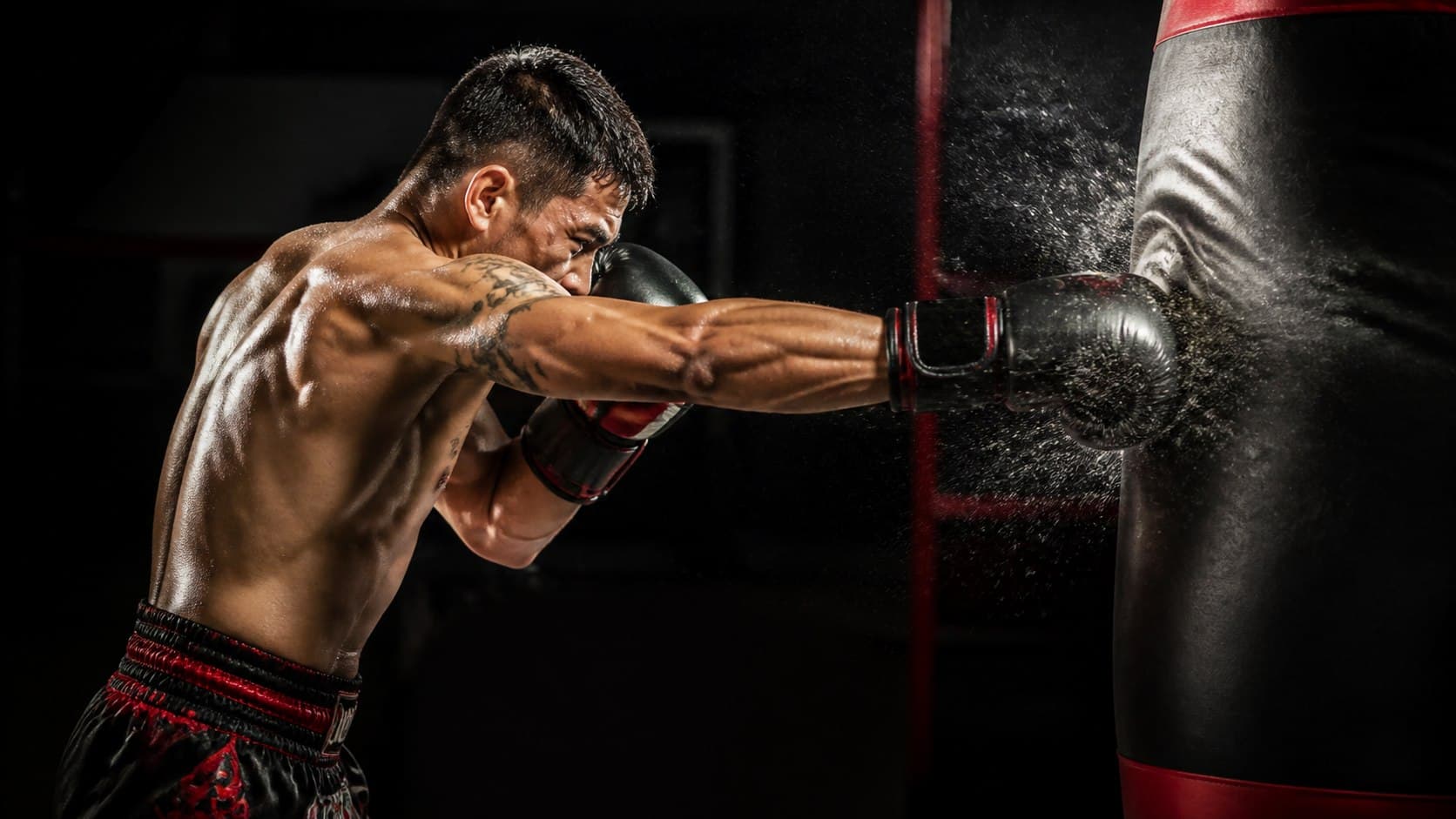
Knockout power is one of the most mythologized qualities in combat sports. Fighters who possess it are often described as being born with it, as if power were a mysterious genetic gift that some people receive and others do not. There is some truth to this view. Certain physical attributes, such as limb length, muscle fiber composition, and skeletal density, do contribute to raw power potential. But the much larger truth is that knockout power is overwhelmingly a product of technique, timing, and committed practice. Fighters who are not born with particular physical gifts can develop significant power through correct training, and fighters who have the physical gifts often fail to express them because their technique is inefficient.
The first principle of power is that it comes from the ground, not from the arm or leg. Every effective strike in Muay Thai begins with the feet pushing against the floor, sends force up through the legs and hips, rotates through the torso, and finally transmits through the arm or leg to the target. The striking limb is the last thing to arrive, and it is also the smallest contributor to the total power. Fighters who try to punch with their arm or kick with their leg produce strikes that feel fast but lack the body commitment that turns speed into force. The kinetic chain, as this sequence is called, is the fundamental mechanic that separates effective striking from decorative striking.
Rotation is the mechanism that magnifies force. When you throw a cross, your rear foot pivots, your rear hip drives forward, your torso rotates, and your shoulder drives the fist through the target. The rotation is what makes the strike powerful. Without it, you are pushing the punch instead of throwing it, and the resulting impact is dramatically weaker. The same principle applies to kicks, where the support foot must pivot fully to allow the hip to rotate through the target. If the support foot stays flat, the hip cannot rotate, and the kick loses most of its power regardless of how fast the leg moves.
Follow-through is another essential element. A power strike is not a poke that stops at the target. It is a strike that goes through the target, as if you were trying to hit something six inches behind the point of contact. This commitment produces the accelerating impact that concussive strikes require. Fighters who pull back at the last moment, either to protect themselves or because they are unsure of their aim, lose the follow-through and dramatically reduce the force they deliver. Committing fully to each strike takes practice, because it feels risky, but it is essential for real power.
Timing is just as important as mechanics. A perfectly executed strike that lands when the opponent is moving into it has many times the effective force of the same strike landing on an opponent who is moving away. The best knockout artists in Muay Thai are not necessarily the ones with the hardest raw striking power, but the ones who know when to throw. Samart Payakaroon was famous for landing relatively modest-looking punches that still ended fights because his timing was impeccable. Opponents walked into his strikes at exactly the worst moment for them, and the result was a finish that looked effortless.
Training for power involves several complementary approaches. Heavy bag work is essential, particularly power rounds where you commit fully to each strike with rest between individual attempts to allow full recovery. Hitting the bag with controlled intensity for extended periods builds the specific muscular endurance needed to maintain power through a round, but power development itself requires the ability to commit to each strike without fatigue interference.
Pad work with a knowledgeable holder allows you to practice power strikes against a responsive target that provides feedback. A good padman can tell you when your kick lacks full rotation, when your punch is disconnected from your hips, or when your follow-through is incomplete. The correction happens in real time, and the cumulative effect over hundreds of sessions is dramatic improvement in both technique and output.
Strength training in the gym contributes to power potential, though the relationship is less direct than beginners often assume. General strength work, particularly compound movements like squats, deadlifts, and cleans, builds the foundation that supports explosive movement. But strength alone does not produce striking power. A powerlifter who cannot translate his raw strength into properly sequenced striking mechanics will not hit harder than a technically sound fighter of half his strength. The technique is the conversion rate from strength to force.
Plyometric and explosive exercises, such as medicine ball throws, box jumps, and kettlebell swings, train the rapid force production that striking requires. These exercises bridge the gap between raw strength and applied power, teaching the nervous system to express force quickly. Incorporated intelligently into a fighter's conditioning program, they contribute to power development without interfering with the technical work on the bag and pads.
Finally, power requires confidence. Fighters who are afraid to commit fully, either because they are unsure of their technique or because they fear counter-strikes, will always produce less power than their physical potential allows. Building confidence happens through repetition, through positive results in training, and through the experience of landing clean power strikes in sparring. Fighters who have internalized the confidence to commit fully without hesitation access the full potential of their mechanics, and that is when the knockouts start coming.