4 min read
THE COMPLETE GUIDE TO MUAY THAI KNEE STRIKES
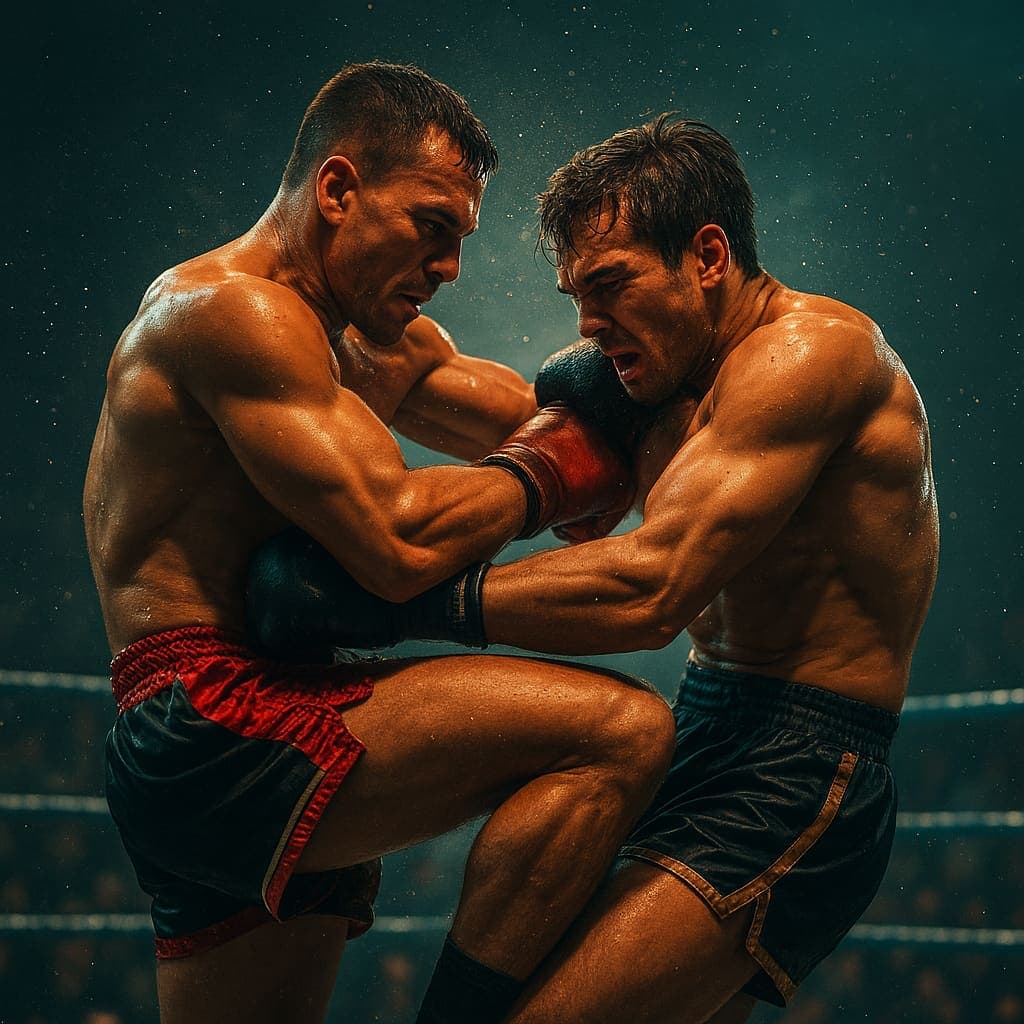
The knee, or kao, is one of the most iconic and devastating weapons in Muay Thai. No other striking art uses knees the way Thais do, and the knee is the weapon that most clearly distinguishes clinch-based Muay Thai from any other stand-up discipline. A well-placed knee can knock out a heavyweight, break ribs, stop a forward pressure fighter cold, and win rounds single-handedly in the traditional scoring system. Learning to use knees effectively requires understanding the major varieties, the mechanics of each, and the situations in which they work best.
The straight knee, or kao trong, is the foundational knee strike. It is thrown by driving the knee directly forward into the opponent's body, typically the midsection, from any position where you have the opponent in front of you. The power comes from a combination of hip drive, grip on the opponent's neck or shoulders to prevent them from backing away, and a sharp upward motion of the knee. The straight knee can be thrown from the clinch, from a two-handed collar grip, or even from a looser tie-up where you have one hand controlling the opponent's neck. It is the workhorse of knee strikes, and fighters who know how to use it can grind down opponents round after round.
The diagonal knee, or kao chiang, comes in at an angle and is often used when the opponent is slightly off-center or moving sideways. It targets the floating ribs or the liver and is particularly effective because it can land on angles where a straight knee would not reach. Liver shots with a diagonal knee have ended many fights.
The curving knee, or kao khong, travels in a more circular path and wraps around the opponent's body. It is thrown similarly to a horizontal elbow in concept, with the hip and torso driving the knee in an arc rather than a straight line. Curving knees target the flanks and the short ribs, and they are particularly useful when the opponent has blocked or framed against a straight knee attempt.
The jumping knee, or kao loi, is the crowd-pleasing version of the weapon. It is thrown by leaping toward the opponent and driving the knee into the face or body at the apex of the jump. Jumping knees look spectacular and score heavily when they land, but they telegraph strongly and leave the thrower badly exposed if they miss. Experienced fighters use them selectively, usually as finishing strikes against a hurt opponent or as surprise attacks when the opponent is not expecting a lead-off.
The flying knee is related to the jumping knee but is usually thrown from a longer distance, with the fighter running or stepping into the attack before leaving the ground. It is the highest-risk knee strike but also potentially the most spectacular, and fighters like Rodtang and Buakaw have used it to finish major fights on the biggest stages.
The short knee, or kao sok, is thrown from extreme clinch range, often with one or both arms wrapped around the opponent's neck. The power on a short knee comes entirely from the hip drive and the grip, because there is no distance to generate momentum. What short knees lack in single-strike power they make up for in frequency and accumulation. A fighter who controls the clinch can land dozens of short knees per round, wearing the opponent down relentlessly and eventually scoring a finish or winning a clear decision.
Setups for knees vary by situation. In the clinch, the primary setup is the grip. Once you have control of the opponent's neck with a collar tie or double collar, knees become available. Breaking the opponent's posture, pulling their head down toward your hip, magnifies the force of the knee on contact. Outside the clinch, knees can be set up with punches that draw the opponent's hands up, creating openings to the body. They can also be set up with kicks that force the opponent to check, leaving their body exposed.
Defending against knees is difficult and starts with avoiding the clinch entirely. If you cannot avoid the clinch, the next best defense is hand fighting to prevent the opponent from establishing dominant grips. Once the opponent has inside position and a good neck tie, you are in trouble, and the priority becomes framing with the forearms to create distance, turning the opponent into the ropes or ring post, or shooting underhooks to disrupt their posture.
The knee is the weapon that rewards patience, grip, and commitment. Fighters who develop their clinch and learn to deliver knees with the whole body rather than just the leg find that the knee becomes the weapon that ties their entire game together. Many of the greatest Thai fighters, across every era, have been defined by their knees.