4 min read
THE ULTIMATE HAND WRAPPING GUIDE
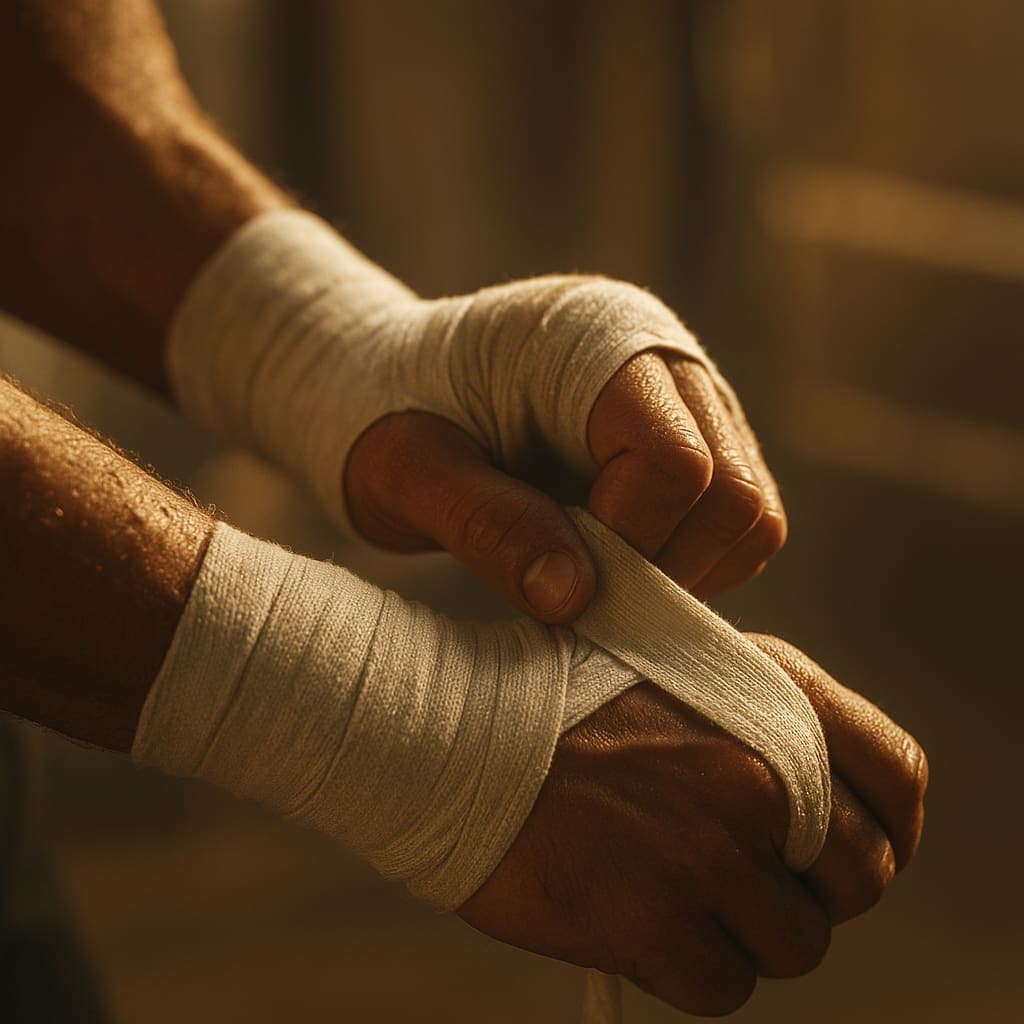
Hand wraps are the most underrated piece of equipment in Muay Thai. A good wrap stabilizes the wrist, compresses the knuckles into a tight striking platform, and spreads impact across the small bones of the hand. A bad wrap does the opposite, leaving you with loose cotton bunched at the wrist and a knuckle line that collapses on the heavy bag. Every nak muay should be able to wrap their own hands in under three minutes without thinking about it.
The standard wrap used in most Thai camps is a 180-inch semi-elastic cotton wrap with a thumb loop at one end and a Velcro closure at the other. Some fighters prefer the stiffer Mexican-style wraps for their slight stretch and shape retention. Avoid the short 108-inch wraps sold in sporting goods stores for beginners. They are not long enough to provide the layering you need for bag work and sparring.
Begin by slipping the thumb loop over your thumb with the wrap material facing down on the back of your hand. This orientation is critical. If you start with the wrap on the palm side, you end up working against the direction that supports the wrist. Bring the wrap across the back of the hand toward the pinky side, then circle the wrist three times. Pull firmly but not so tight that you cut off circulation. Your wrist should feel braced, not strangled.
From the wrist, bring the wrap up diagonally to the base of the pinky knuckle, then wrap around the knuckle line three times. This is where you build the padding that protects your metacarpals. After the third pass, drop back down to the wrist and lock it in with one more wrist wrap. Then return up toward the knuckles and begin the X-pattern through the fingers. This is the technique that separates a functional wrap from a decorative one.
The X-pattern starts by threading the wrap between your pinky and ring finger from back to front, crossing diagonally across the palm, and anchoring at the wrist. Come back up and thread between the ring and middle finger. Anchor again. Then between the middle and index finger. Each pass creates an X on the back of the hand that holds the knuckle padding in place and prevents it from sliding when you make a fist.
After the finger threads are complete, wrap the thumb. Take the material around the base of the thumb once, then back to the wrist. A common mistake is to wrap the thumb too aggressively, which restricts movement and creates pressure points. The thumb wrap should feel supportive, not constrictive. Lock the thumb in by circling the wrist again and then working your way back up to the knuckles for a final two or three passes over the top.
Finish by using any remaining length to bridge between the knuckles and the wrist in a figure-eight or spiral pattern until you run out of material. The Velcro closure should end on the back of the wrist, not on the palm side where it can dig in. Make a fist. The wrap should feel tight when your hand is closed and slightly loose when your hand is open. If your fingers go numb within a minute, the wrap is too tight and needs to come off and be redone.
Wash your wraps after every session. Sweat and bacteria break down the cotton fibers and create the distinct smell that plagues every Muay Thai gym. A mesh laundry bag keeps the wraps from tangling in the machine. Air dry them if possible, or tumble dry on low. Replace wraps every six to twelve months depending on how often you train. A worn-out wrap that has lost its elasticity provides almost no wrist support and should be retired.