5 min read
THE EVOLUTION OF MUAY THAI FROM ANCIENT BATTLEFIELD TO MODERN RING
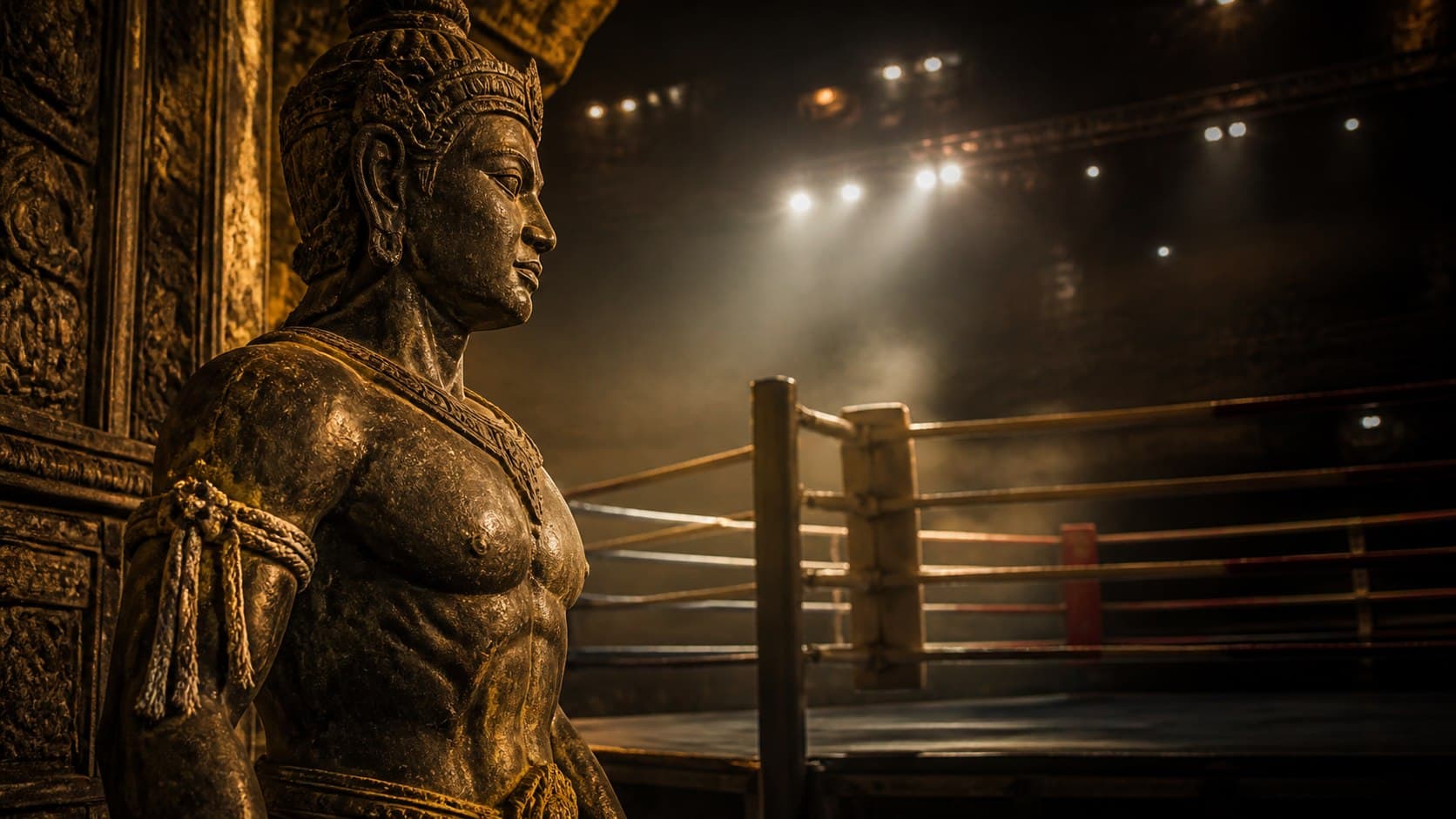
Muay Thai as we know it today is a stadium sport with formal rules, regulated rounds, and international recognition. But the art did not begin in a ring, and the modern version is only the most recent chapter in a history that goes back centuries. The roots of Muay Thai are in the battlefields of the ancient Siamese kingdoms, where the techniques that modern fighters use in controlled competition were developed for very different purposes. Understanding this history deepens your appreciation for the sport and reveals why certain techniques look the way they do.
The ancestor of modern Muay Thai is a form of unarmed combat called Muay Boran, literally meaning ancient boxing. Muay Boran was practiced by Thai soldiers as a secondary combat skill to supplement their weapons training. If a soldier lost his sword or spear in battle, he needed to be able to fight effectively with his hands, feet, elbows, and knees. The techniques that developed for this purpose emphasized maximum damage with each strike, since real combat offered no second chances. Many of the brutal elbow strikes and devastating knees that characterize modern Muay Thai have their origins in these wartime techniques, where the goal was not to win points but to disable an armed opponent.
The transition from battlefield art to sport began in the age of the Siamese kings, when royal tournaments were held at court and celebrated as entertainment and prestige events. Kings patronized these tournaments, and champions gained significant social status. Matches were held in open spaces, and the combat was largely unregulated compared to modern standards. Fighters wrapped their hands with rope soaked in herbal solutions, which served both as hand protection and as an abrasive that could cut opponents. Gloves as we know them did not exist. Rounds were not timed, and fights continued until one fighter could not continue or conceded.
The name Muay Thai itself did not exist until relatively recently. For most of its history, the art was simply called Muay, meaning boxing or combat. The designation Muay Thai, meaning Thai boxing, came into use as a way to distinguish the Thai form from other variants, including Muay Lao from Laos and Muay Khmer from Cambodia, all of which share common roots and similar techniques. The various Southeast Asian boxing traditions are closely related and probably descended from a common ancestral art, though each developed its own distinct characteristics over time.
Modernization began in the 1920s and 1930s, when the Thai government worked to regulate and standardize the sport. Formal rules were introduced, including the use of boxing gloves in place of rope wraps, the division of fights into timed rounds, and the establishment of weight classes. These changes were influenced by Western boxing, which was spreading globally at the time, and they transformed Muay Thai from a relatively unregulated martial art into a modern combat sport that could be presented in stadiums and broadcast to wider audiences. Lumpinee Stadium opened in 1956 and Rajadamnern Stadium opened in 1945, establishing the two premier venues that would define professional Muay Thai for generations.
Through the second half of the twentieth century, Muay Thai became a central part of Thai popular culture. Television broadcasts of Lumpinee and Rajadamnern fights reached audiences across the country, and the most popular fighters became household names. The sport's integration with the gambling culture, which we have discussed in a separate article, gave it a commercial foundation that supported the camps and trainers who developed the next generations of fighters. Legends like Samart, Dieselnoi, and others emerged from this era and established the technical foundation that modern fighters still build upon.
The international era of Muay Thai began in earnest in the 1990s, when foreign fighters started traveling to Thailand to train and compete in significant numbers. The Dutch kickboxing scene had already produced fighters like Ramon Dekkers who brought Muay Thai techniques to Europe. American and European interest grew steadily, and by the 2000s Muay Thai schools had opened in most major Western cities. The K-1 kickboxing promotion in Japan, which incorporated elements of Muay Thai into its ruleset, brought the art to a global audience and produced crossover stars like Buakaw Banchamek.
The twenty-first century has seen Muay Thai continue to spread and evolve. Organizations like ONE Championship have brought traditional-style Muay Thai to huge international audiences through television and streaming. Women's Muay Thai, which was historically restricted, has grown into a major part of the sport. Amateur and youth programs have expanded around the world. And the ancient techniques that began as battlefield skills are now practiced for sport, fitness, and self-defense on every continent.
Through all of this evolution, the core of the art has remained recognizable. The eight limbs, the training methods, the respect for teachers, and the cultural rituals connect modern fighters to a tradition that stretches back centuries. When a contemporary nak muay performs the Wai Kru Ram Muay before a fight, they are doing something that their spiritual ancestors would have recognized, and that continuity is part of what gives Muay Thai its unique character among modern combat sports. The sport has changed, but it has not been replaced, and the link between the ancient battlefield art and the modern ring is stronger than most people realize.