4 min read
A STRETCHING ROUTINE TO UNLOCK FIGHTER-LEVEL FLEXIBILITY
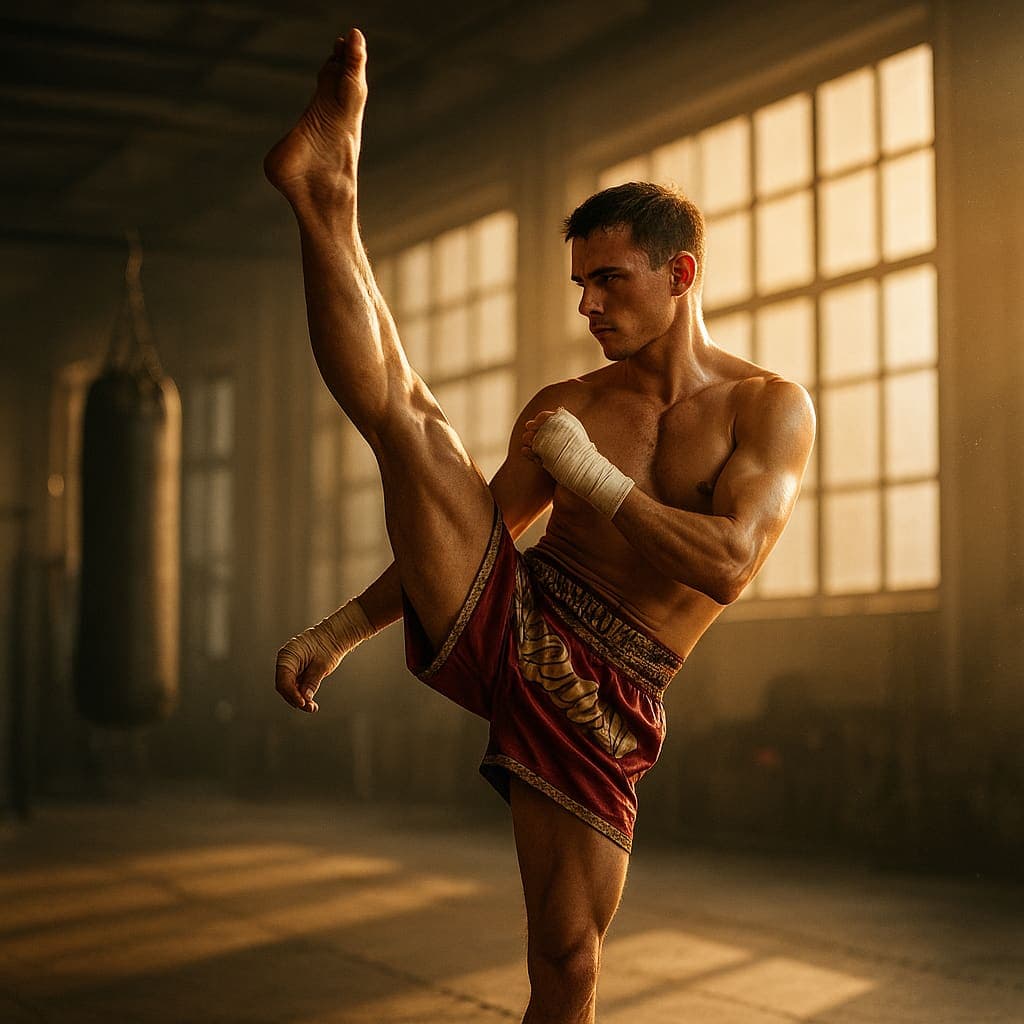
Walk into any serious camp in Thailand and you will see something that surprises new visitors: fighters casually dropping into splits between pad rounds, hooking their own leg over their head to stretch the hamstring, or sitting in a deep squat for ten minutes while scrolling a phone. That flexibility is not genetic. It is built, day after day, through a simple routine that costs nothing and takes roughly twenty minutes. If you want to kick head-high with balance, knee from a deep clinch, or throw a teep at chin level without falling over, you need to invest in mobility the way Thai fighters do.
Start with the hips. Most people who walk into a gym for the first time cannot sit comfortably in a deep squat because years of chair sitting have shortened the hip flexors and stiffened the ankles. The deep squat hold, often called the Asian squat, is a foundational position. Aim to sit in it for a total of five minutes per day, broken into whatever intervals you can tolerate. Keep your heels flat, your back long, and your chest open. Over weeks you will notice the position becoming a place of rest rather than a struggle.
The lizard pose and low lunge are essential for opening the hip flexors that pull tight from sitting and from the pivoting action of roundhouse kicks. Step one foot forward into a deep lunge, let the back knee rest on the ground, and sink the hips forward until you feel a stretch across the front of the back thigh and hip. Hold for ninety seconds on each side. On days when your kicks feel tight, double this.
For kicking height specifically, nothing beats the seated straddle and the pancake stretch. Sit on the floor with your legs spread wide, then slowly walk your hands forward, keeping your back as flat as possible rather than rounding. Breathe into the stretch and relax. Hold for two minutes. Follow this with a front split progression: extend one leg in front, the other behind, and lower your hips toward the ground as far as comfort allows. Use blocks or a cushion under the front hamstring if needed. Practice both left and right splits even if you kick off one side, because imbalances create chronic hip problems.
The hamstrings respond best to long, patient holds rather than aggressive bouncing. Lie on your back, loop a towel or strap around the ball of one foot, and draw the leg straight up toward the ceiling. Keep both legs straight, keep the opposite hip pressed to the floor, and breathe. Two minutes per side. This single stretch, done daily, will transform your teep height and roundhouse fluidity within a few months.
Do not neglect the shoulders and thoracic spine. Clinch fighters need shoulder mobility to get double collar ties without straining the rotator cuff. A simple doorway stretch, where you place your forearm against a door frame and step through, opens the chest and front deltoid. Thread-the-needle and cat-cow on the floor improve thoracic rotation, which is what gives your hooks and elbows real range.
Ankle mobility is the final piece most fighters ignore. Restricted ankles force the knee inward during kicks and undermine your base during clinch exchanges. Kneel in front of a wall, place the toe of one foot against the baseboard, and drive your knee forward over the toes without lifting the heel. This simple mobilization, done ninety seconds per side, unlocks a surprising amount of function.
Consistency beats intensity every time. Twenty minutes a day, every day, will take you further in six months than one hour a week for six years. Make it part of your warm-down after training, or run through the routine while watching fights in the evening. The flexibility you see in Thai fighters was built exactly this way, one patient session at a time.