4 min read
ELBOW STRIKES — MUAY THAI'S MOST DANGEROUS WEAPONS
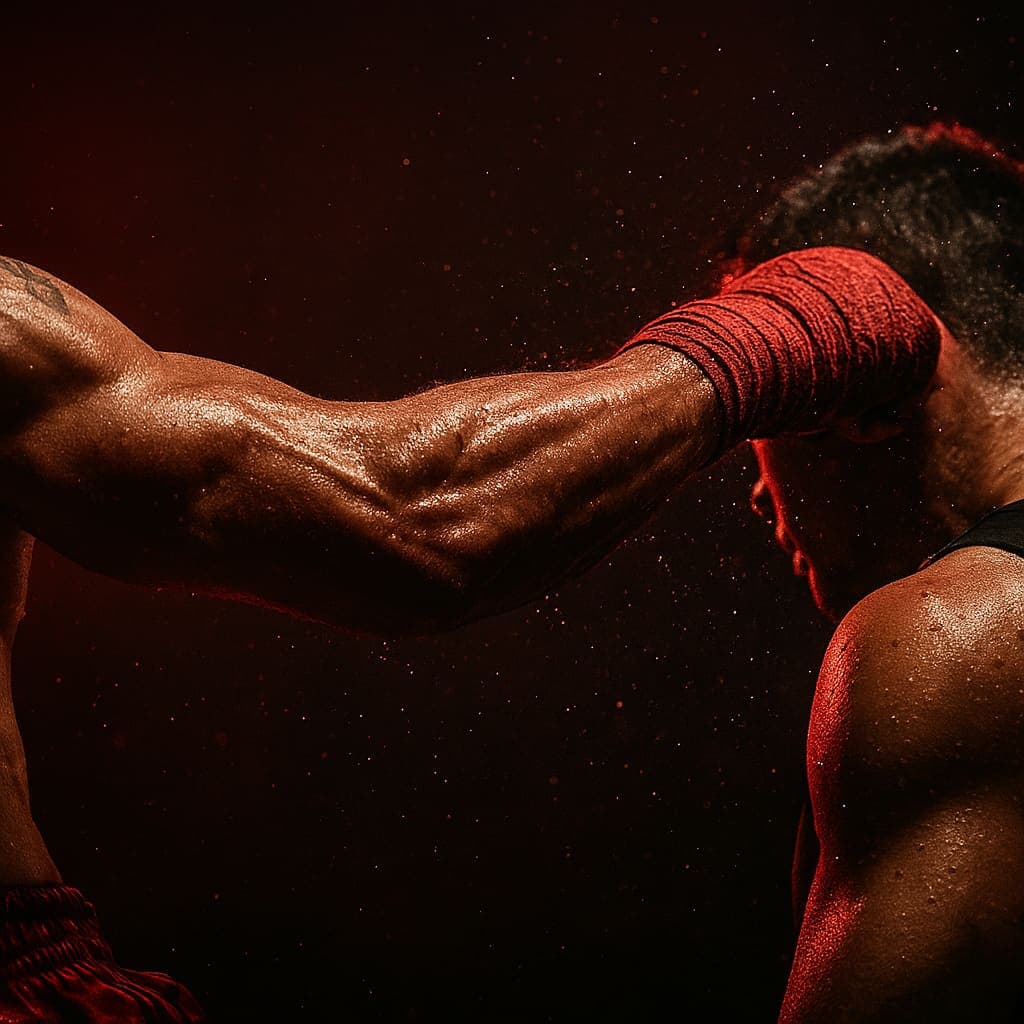
If there is one technique that defines Muay Thai more than any other, it is the elbow, or sok. Punches exist in many striking arts. Kicks exist in many striking arts. Knees exist in several. But elbows, as a legal and primary weapon, are the exclusive domain of Muay Thai. A clean elbow can cut an opponent open, knock them unconscious, or break bone in a way that almost nothing else in combat sports can match. The elbow is what makes Muay Thai feared, and it is what transforms the clinch from a stalling tactic into one of the most dangerous positions in fighting.
There are several varieties of elbow, and each has its own use. The horizontal elbow, sok tad, travels in a straight line parallel to the ground and is typically thrown across the opponent's face or temple. It is fast, relatively easy to set up, and devastating when it lands. The diagonal elbow, sok chiang, cuts downward at an angle and is the classic cutting weapon, often landing on the eyebrow or cheekbone and producing the deep cuts that end fights by doctor stoppage. The uppercut elbow, sok ngat, travels upward from below and is particularly nasty against a forward-leaning opponent, catching the chin or the bridge of the nose. The spinning back elbow, sok klap, is the crowd pleaser, rotating the entire body to deliver the point of the elbow with the momentum of the whole torso.
Mechanically, the key to an effective elbow is understanding that the power comes from the rotation of the body, not from the arm. A fighter who tries to swing the arm alone produces a weak elbow that lacks knockout power. A fighter who rotates the hips, the shoulders, and the body as a single unit produces an elbow that can concuss a heavyweight. The elbow joint itself should be slightly bent, not locked, so that the point of the bone is what makes contact. This is similar to how a golfer strikes a ball: the club is the last thing to arrive, but the power comes from the swing of the whole body.
Defensively, elbows are terrifying to face because they can be thrown from almost any position. A fighter who is in the clinch can elbow. A fighter who is slipping a punch can elbow on the way back up. A fighter who has just been hit can counter with an elbow. The short distance required to generate power means that escaping elbow range is much harder than escaping kick range. Against an experienced elbow fighter, the only real defense is good head movement, framing with the forearms, and avoiding the clinch entirely when possible.
The reason even heavyweights fear elbows from smaller men has to do with pressure and surface area. An elbow concentrates the force of the entire body into a single small bony point. That pressure, measured in force per unit of area, is extreme. A punch from the same fighter might rock a much larger opponent, but a clean elbow to the same spot often ends the fight immediately. The smaller striking surface also means that even when the elbow does not knock someone out, it frequently cuts them, and cuts can stop fights by themselves when the cut is severe enough to impair vision or pose a risk to the eye.
In traditional Thai rules, elbow strikes score heavily and are often the deciding factor in close rounds. International rulesets sometimes restrict elbows or require forearm pads, which significantly changes the tactical landscape. Fighters who cross over to international promotions sometimes find that the sudden disappearance of clean elbows changes their whole approach. The elbow is the weapon that makes traditional Muay Thai what it is.
Training elbows begins with understanding range. They work best at clinch distance or in tight punching range. They do not work well at kicking range, where the fighter has to close distance first, and they are often a finishing weapon after other setups rather than a lead strike. Work elbows on the pads with a knowledgeable trainer, in the clinch against a resisting partner, and always with the understanding that they are a weapon to be respected, trained with care, and used with both skill and restraint.